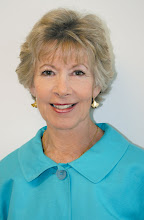
Joanna Park is a work-life consultant and the author of a new book on the need for globalization and diversity in Japan. She has been my client for over seven years designing flexible work options for Japan. Here is her interview:
1. Tell me how the lives of you, your family and friends have changed since the eqrthquake.
We became much more aware of the power of earthquakes and tsunamis, although earthquakes have been common in Japan. We realize that we have no control over natural disasters and we just need to accept them. We also have started to think abut our priorities more seriously and how to use our time better to live more fruitfull while we are alive. We appreciate life more.
2. Has anything changed in the workplace--such as more open dialogue, compassion, flexibility, gratefulness, etc.
I think Japanese workplace has changed quite a bit with more compassion, appreciation and caring. Since we will be lacking massive electricity in the summer, companies are planning to introduce different types of flexible work arrangements, such a telework, summertime, and longer summer vacations that they have never thought of trying if this hadn't happened. It is expected that workers will have more time in the evening for personal activities which in turn could change not only the lifestyle but also the personal values of each individual.
3. How are young people reacting to all the changes since the earthquake?
They appreciate and care for family more. They also became more interested in volunteer work and contributing to others. More and more young workers take volunteer work vacation when their company offers, conduct charity events, help fund raising and many more.
4. What do you foresee in the future of Japan--individual lives and work lives?
The disaster has really impacted Japan in so many ways. It is very hard to foresee the future, but I truly believe that we will be seeing a lot of changes in the society, companies and people here in a positive way.
5. Can you see any upsides from the recent events?
People appreciate simple things and ordinary life more and realize the importance of relationships. Companies became more understanding of employees' personal lives and also it has forced companies to think about ways of working flexibly.
I think it has become a great "chance" for Japanese to change. Japanese dislike and have been avoiding change but the events have given Japanese a sense of emergency and a good reason to change.
Showing posts with label upside. Show all posts
Showing posts with label upside. Show all posts
Thursday, June 2, 2011

Tuesday, September 21, 2010
Possibilities: An Upside of Changing Times
I recently attended a yoga class where the teacher began the session with a discussion on the consideration of possibilities. He asked us to keep this word in our minds throughout the class. As we began our poses, he pushed us to hold the positions for a long period and continue to improve them. While doing so, he kept encouraging us by saying “possibilities.” At first I was really annoyed. I simply wanted to focus on the positions and get on with the class. Then, I had difficulty with my right leg due to an old injury. Every time I lunged, I could feel the pain in the thigh and up through the back of the leg. My tendency in the past was to back off and not do the pose on the right side. I tentatively moved the leg in the position and it felt very uncomfortable. But the teacher kept saying the word possibilities. My annoyance gave way to his mantra and I pushed myself further in each pose. I’m not saying it was great but, by the end of class, I had gone much further and worked through my pain to a stronger place. I was actually feeling more flexible and less stiff. At the end of class, he asked us to see how long we could hold the promise of possibilities in our daily lives. Throughout the day, as issues came up, I stopped to think about the possibilities instead of the problems.
It is easy to get discouraged in our daily lives with the ongoing recession and pessimism in our country. Yet, if we can refocus the negative energy into possibilities, we might push through the difficulties to another place where there is more light and hope. Think possibilities!
It is easy to get discouraged in our daily lives with the ongoing recession and pessimism in our country. Yet, if we can refocus the negative energy into possibilities, we might push through the difficulties to another place where there is more light and hope. Think possibilities!
Tuesday, June 29, 2010
Surviving in the Wilderness of Life
I just returned from a two week trip to the northern part of Australia, known as the Kimberly. It is an area of wilderness that is pristine, spiritual and can be dangerous. There are no roads, towns, or communication. Very few people live there. I was struck by the beauty as well as the potential danger because of wildlife (crocodiles, snakes) lack of water resources, and potential flooding. (It floods six months of the year and is closed to visitors.)
During my trip, I learned about survival and sustainability. The aborigines lived there 30, 000 years and survived without shelter, clothes, or easily accessible food. Many of the pioneers came in the early 1900’s and perished and many left because of the harshness.
I reflected about what it would mean to survive in this wilderness. What skills would I need? What new ways of working and living would I have to adapt? How would I cope without the usual communication vehicles (phone/internet). How would I find happiness within a harsh environment? There is a woman who manages a cattle station and she stays in the area during the six “wet” months when the territory is closed down. Her stamina, creativity, skills and tenacity to survive are admirable. I also came across a recent article by Margaret Wheatley which discusses the wilderness in relation to our lives.
People who are lost in the mountains or wilderness, who either survive or die by the choices they make, at first fight to make their old maps work. They do everything possible to make the old maps fit the present circumstance-but they never can. In wilderness situations, this grasping goes on until the person is confronted with the fact that they're about to die. They will survive only if they acknowledge that there's no way out of their present peril; they must give up their old maps and acknowledge that they're truly lost. Once they recognize this, they begin to notice where they really are, what's going on, what's useful information available here and now. They make new maps and find their way home.
My questions to you: Do your current life maps work in today’s world or do you need to make new ones? Can you acknowledge that you might be truly lost in your search for a meaningful career and personal life? Can you recognize that it is time to start over and analyze where you are, what’s going on in the world and yourself and how you can evaluate and use the “reality of your here and now” to help you move forward? What do you need to change?
In our book, Upside, we discuss the new reality and the need to adapt to a rapidly changing economy and physical environment.
Share with us your comments and stories on this topic. We look forward to hearing from you.
Bonnie Michaels
During my trip, I learned about survival and sustainability. The aborigines lived there 30, 000 years and survived without shelter, clothes, or easily accessible food. Many of the pioneers came in the early 1900’s and perished and many left because of the harshness.
I reflected about what it would mean to survive in this wilderness. What skills would I need? What new ways of working and living would I have to adapt? How would I cope without the usual communication vehicles (phone/internet). How would I find happiness within a harsh environment? There is a woman who manages a cattle station and she stays in the area during the six “wet” months when the territory is closed down. Her stamina, creativity, skills and tenacity to survive are admirable. I also came across a recent article by Margaret Wheatley which discusses the wilderness in relation to our lives.
People who are lost in the mountains or wilderness, who either survive or die by the choices they make, at first fight to make their old maps work. They do everything possible to make the old maps fit the present circumstance-but they never can. In wilderness situations, this grasping goes on until the person is confronted with the fact that they're about to die. They will survive only if they acknowledge that there's no way out of their present peril; they must give up their old maps and acknowledge that they're truly lost. Once they recognize this, they begin to notice where they really are, what's going on, what's useful information available here and now. They make new maps and find their way home.
My questions to you: Do your current life maps work in today’s world or do you need to make new ones? Can you acknowledge that you might be truly lost in your search for a meaningful career and personal life? Can you recognize that it is time to start over and analyze where you are, what’s going on in the world and yourself and how you can evaluate and use the “reality of your here and now” to help you move forward? What do you need to change?
In our book, Upside, we discuss the new reality and the need to adapt to a rapidly changing economy and physical environment.
Share with us your comments and stories on this topic. We look forward to hearing from you.
Bonnie Michaels
Subscribe to:
Posts (Atom)